
Introduction
Access management in hotels becomes a critical point during peak season. When occupancy rises, any failure in the system causes losses, loss of control and a poor experience for the guest.
It is not a one-off issue. It is a structural failure.
1. Uncontrolled access: loss of control and revenue
One of the most common mistakes in access management in hotels and campsites is the lack of real control over who enters the facilities.
This leads to:
- Overcrowding in common areas (pools, buffets, activities)
- Access by unauthorized people
- Loss of revenue from improper use of services
- Conflicts with guests
In peak season, any crack in control is amplified.
How to avoid it
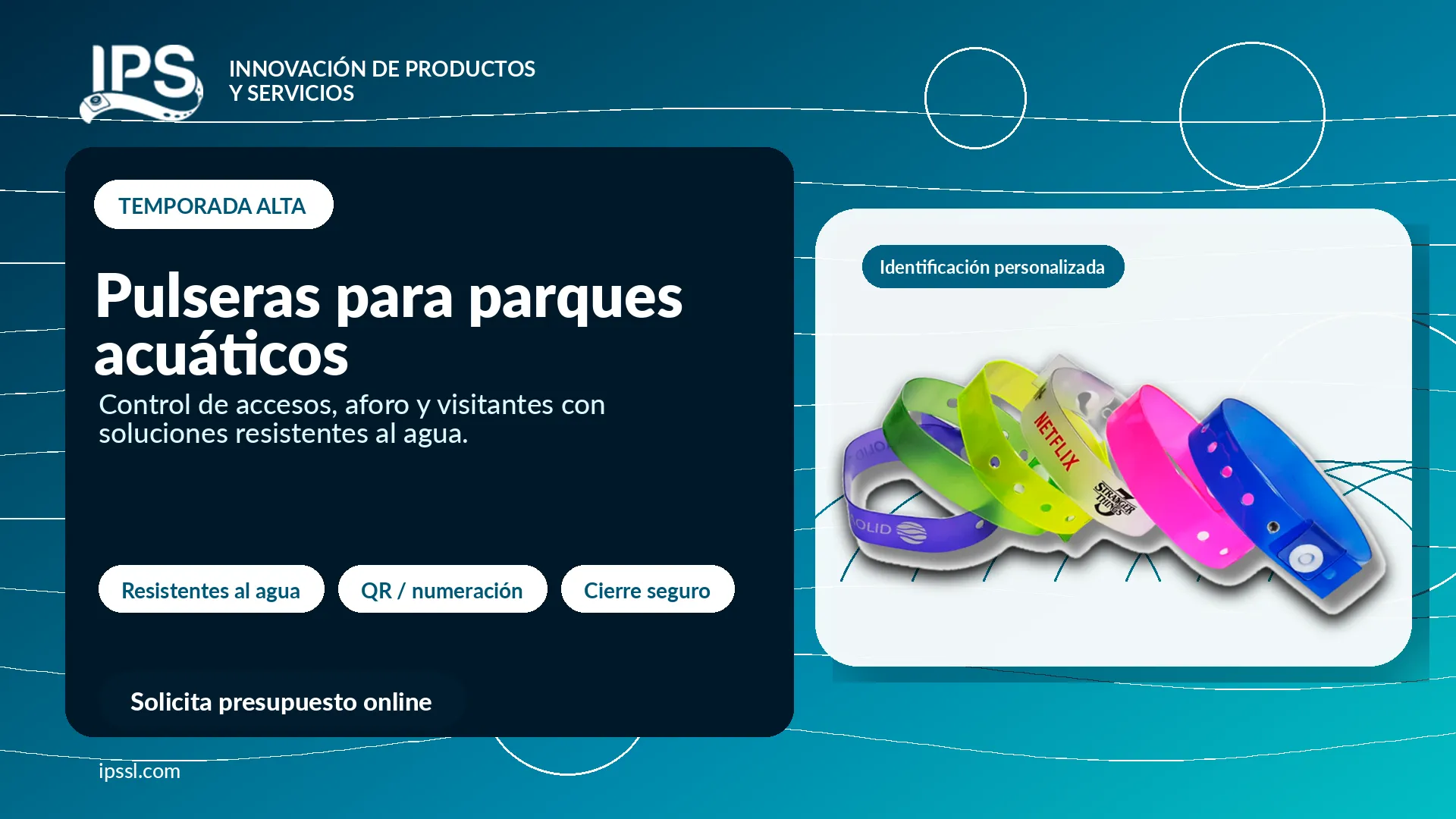
Implement fast visual identification systems such as access control wristbands, which allow staff to immediately identify the type of guest and their permissions.
2. Poorly chosen wristbands: a mistake that impacts the entire operation
Choosing wristbands on price alone is one of the most costly mistakes in the medium term.
Common problems:
- Materials that break or deteriorate with water and sun
- Insecure closures that allow reuse
- Poorly differentiated colors
- Lack of segmentation by guest type
The result: the system loses effectiveness within a few days.
How to choose access wristbands correctly
It is essential to adapt the type of wristband to its use:
- Long stays → textile or reinforced vinyl wristbands
- Short stays → Tyvek wristbands
- Aquatic environments → water-resistant materials
- Service differentiation → clear color codes
A good choice improves control and reduces operational incidents.
3. Lack of stock: the failure that breaks the whole system
In the middle of peak season, running out of wristbands is one of the most critical mistakes.
Consequences:
- Solutions are improvised without control
- Access traceability is lost
- The risk of improper access increases
- Chaos is created at reception and entry points
When stock fails, the whole system fails.
How to avoid supply problems
- Planning based on actual occupancy
- A safety margin in orders
- Suppliers capable of fast delivery (72h)
Wristband availability is not logistics, it is operational control.
4. Operational errors: when the team has no clear system
Even with good materials, without a defined system errors are inevitable.
- Incorrect distribution of wristbands
- Confusion over guest types
- Lack of coordination between shifts
- Absence of clear protocols
How to optimize access operations
- Clear protocols from check-in
- Basic staff training
- A simple visual system (colors, categories)
- Integration with internal processes
The simpler the system, the more effective it will be under pressure.
The key: the problem is not the wristband, it is the system
Many companies look for "the best wristband". But the correct approach is different: the system is what fails.
When the access control system is well designed:
- Operational burden is reduced
- Fraud or improper use is prevented
- The guest experience improves
- Resources are optimized
Conclusion: access management is strategic
In peak season, access management in hotels and campsites stops being an operational detail and becomes a key element of the business. It is not only about controlling entries. It is about protecting revenue, ensuring order and delivering a professional experience.
If the system fails, everything else suffers.
Is your access system ready?
At IPS we help hotels and campsites implement effective access control systems, adapted to their real operations. Request advice with no obligation and optimize your management before the next peak season.